
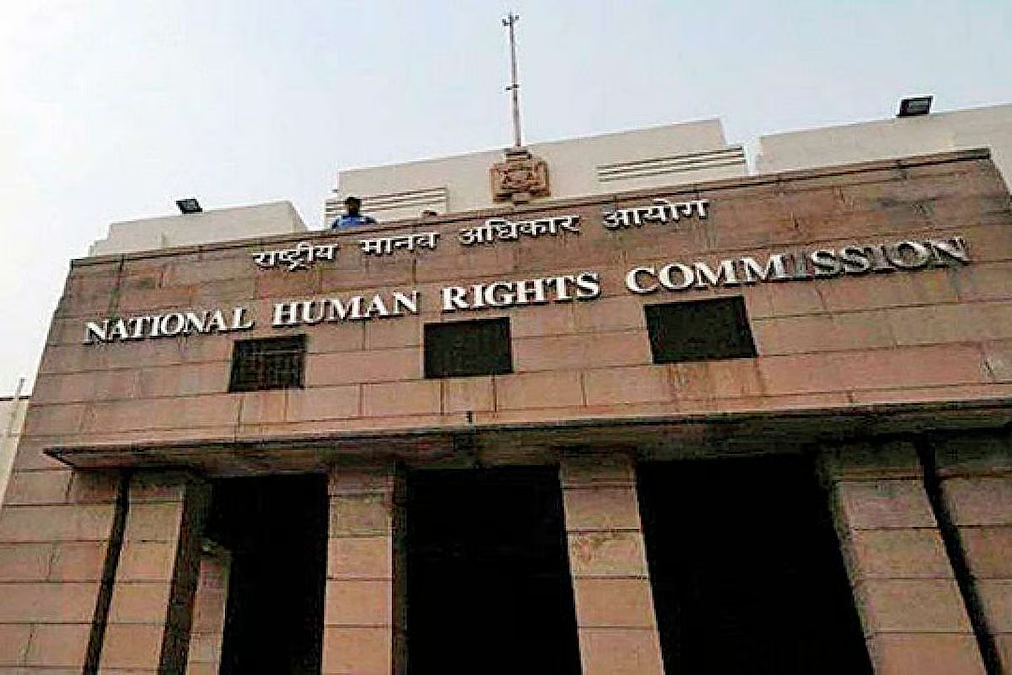
The National Human Rights Commission (NHRC) stands as a powerful statutory body in India, dedicated to safeguarding and promoting human rights — including the essential rights to life, liberty, equality, and dignity. For anyone affected by a violation or aware of one, understanding how to engage with the NHRC is crucial for seeking justice and accountability.
What is the National Human Rights Commission?
Establishment and Mandate
- Established on 12th October 1993 under the Protection of Human Rights Act, 1993, NHRC operates as an independent statutory body with the authority to uphold respect for human rights as outlined in Section 2(1)(d) of the Act.
- Its mission is the protection of rights guaranteed by the Constitution of Indiaand relevant international human rights treaties.
Key Functions of NHRC
- Investigates human rights violations by public servants or neglect by authorities.
- Recommends remedial measures for better human rights practices across the country.
- Reviews laws and constitutional safeguards to ensure robust protection and can suggest improvements.
- Promotes awareness and literacy about human rights through educational activities, publications, and collaboration with NGOs.
- Visits prisons and custodial institutions to monitor the treatment of inmates.
- Advises the government on the implementation of international human rights treaties.
Limitations
- NHRC recommendations are not legally binding.
- Jurisdiction is limited — cannot take up cases older than a year, vague or anonymous complaints, service matters, or issues involving private individuals directly.
- Limited oversight concerning matters related to the armed forces.
How to File a Complaint with NHRC
If you or someone you know is experiencing a violation of human rights, lodging a complaint with the NHRC is a straightforward process. The Commission accepts both onlineand offline complaints.
Eligibility
- Complaints can be submitted by the victim or any other concerned person.
- The complaint can be in English, Hindi, or any language from the Eighth Schedule of the Constitution.
- No fee is charged, and legal representation is not mandatory.
Step-By-Step Guide to Filing a Complaint
A. Online Method
- Visit the Official NHRC Website:
- Go to the NHRC Complaint Portal.
- Visit the Official NHRC Website:
- Register/Login:
- Enter your mobile number and email for verification.
- Select the State where the incident occurred.
- Choose the relevant commission (NHRC or State HRC).
- Register/Login:
- Fill Out the Complaint Form:
- Provide detailed information about the complainant (name, address, contact).
- Provide victim details (name, demographic info, relation to complainant).
- Incident specifics (date, location, summary of facts, responsible authority).
- Specify relief/prayer sought.
- Upload supporting documents (PDF only).
- Fill Out the Complaint Form:
- Preview and Submit:
- Review your details and submit the complaint.
- A unique Diary Number is generated for status tracking.
- Preview and Submit:
B. Offline Methods
- Send by Post:
National Human Rights Commission,
Manav Adhikar Bhawan Block-C,
GPO Complex, INA, New Delhi – 110023
- Send by Post:
- Email: cr.nhrc@nic.in
- Fax: 91-11-24651332
- Helpline: Toll-Free Number: 14433
Include the following in your complaint:
- Details of the incident.
- Victim and accused details.
- Relief requested.
- Any available documentation.
Complaints NOT Entertained
- Anonymous or pseudonymous submissions.
- Frivolous or vague allegations.
- Issues already under judicial consideration or previously decided by the Commission.
- Service matters or civil disputes unrelated to human rights.
Post-Submission: What Happens Next?
- NHRC reviews your complaint for admissibility.
- The unique Diary Number can be used on the portal to track the status of your case.
- If the complaint is accepted, the Commission may order an investigation, seek a response from concerned authorities, make recommendations for relief, or close the matter with reasons provided.
Key Takeaways
- NHRC is your recourse against abuses involving fundamental rights as defined in law.
- The process is accessible, free, and open to all.
- The Commission ensures transparency and follow-up throughout the complaint lifecycle.
Empower yourself—if you witness a violation, act by bringing the issue to the National Human Rights Commission for protection, redressal, and reform.